
Losing hair in the shower is normal. Losing density along your parting is not. A practical guide to telling the difference and acting in time.
Shedding one hundred hairs a day is physiological. What matters clinically is not how many hairs leave, but whether they are being replaced by hairs of the same calibre.
Shedding versus miniaturisation
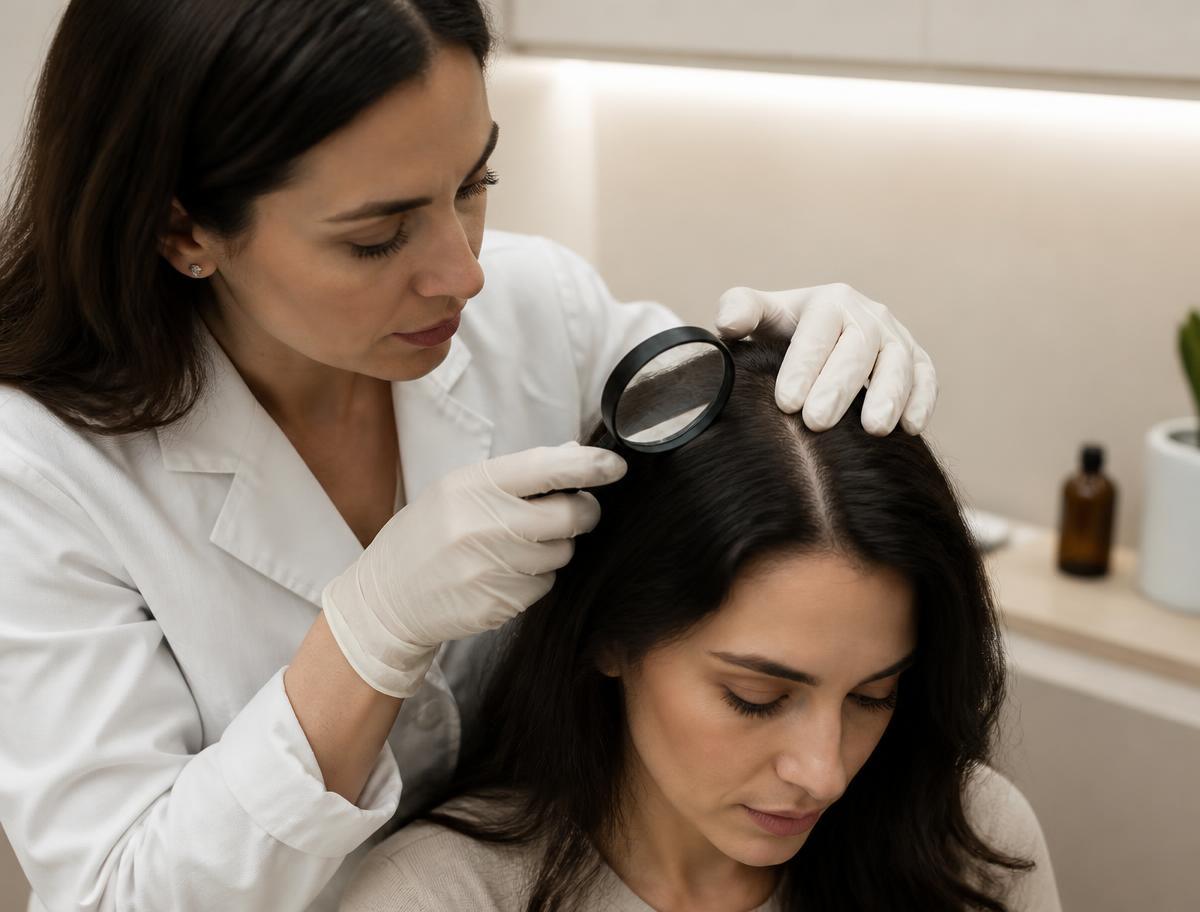
Telogen effluvium — diffuse shedding after illness, crash dieting, childbirth or severe stress — is dramatic but self-limiting, usually resolving within six to nine months once the trigger is corrected. Female pattern hair loss is quieter and more serious: hairs are progressively replaced by finer ones, widening the parting.
- Widening central parting over months — investigate
- Sudden diffuse shedding three months after an illness or delivery — usually reversible
- Patchy smooth bald areas — needs urgent dermatology review
- Itching, scaling or tenderness — scalp disease, treat before cosmetic therapy
The bloods worth doing
Ferritin, full blood count, thyroid function and vitamin D. Ferritin below 30 ng/mL is a common and correctable driver of shedding in women in Egypt, and no topical therapy will outperform correcting it.
“We do not start PRP until the bloods are back. Treating a hair follicle that is starved of iron is expensive disappointment.”
What treatment looks like
Medical therapy first, then regenerative support. PRP sessions are scheduled monthly for three to four months, then quarterly. Mesotherapy and low-level light therapy are adjuncts, not replacements for medical management.
Frequently asked
Is PRP painful?
The scalp is numbed with topical anaesthetic beforehand. Most patients describe pressure rather than pain, and return to normal activity the same day.
How many PRP sessions will I need?
Typically three to four monthly sessions, then maintenance every three to four months, guided by photographic review.
Will hair grow back after telogen effluvium?
In most cases yes, within six to nine months, provided the underlying trigger is corrected.
Is this article a substitute for a consultation?
No. This article is educational. Treatment decisions at New Me are made after an in-person skin assessment, medical history review and, where relevant, imaging or patch testing.
Related treatments
- PRP hair restoration
Monthly induction, quarterly maintenance
- Scalp mesotherapy
Adjunct nutrient support
- Trichology consultation
Bloods and scalp assessment
Related products
Peptide scalp serum
Daily follicular support
Gentle sulphate-free shampoo
Reduces mechanical breakage
About the author
Dr. Nour El Sayed
Laser & Device Lead
Dr. Nour El Sayed oversees the clinic's laser and energy-device programmes, calibrating every protocol to Fitzpatrick type III–V skin, the range most common among our Egyptian patients.