

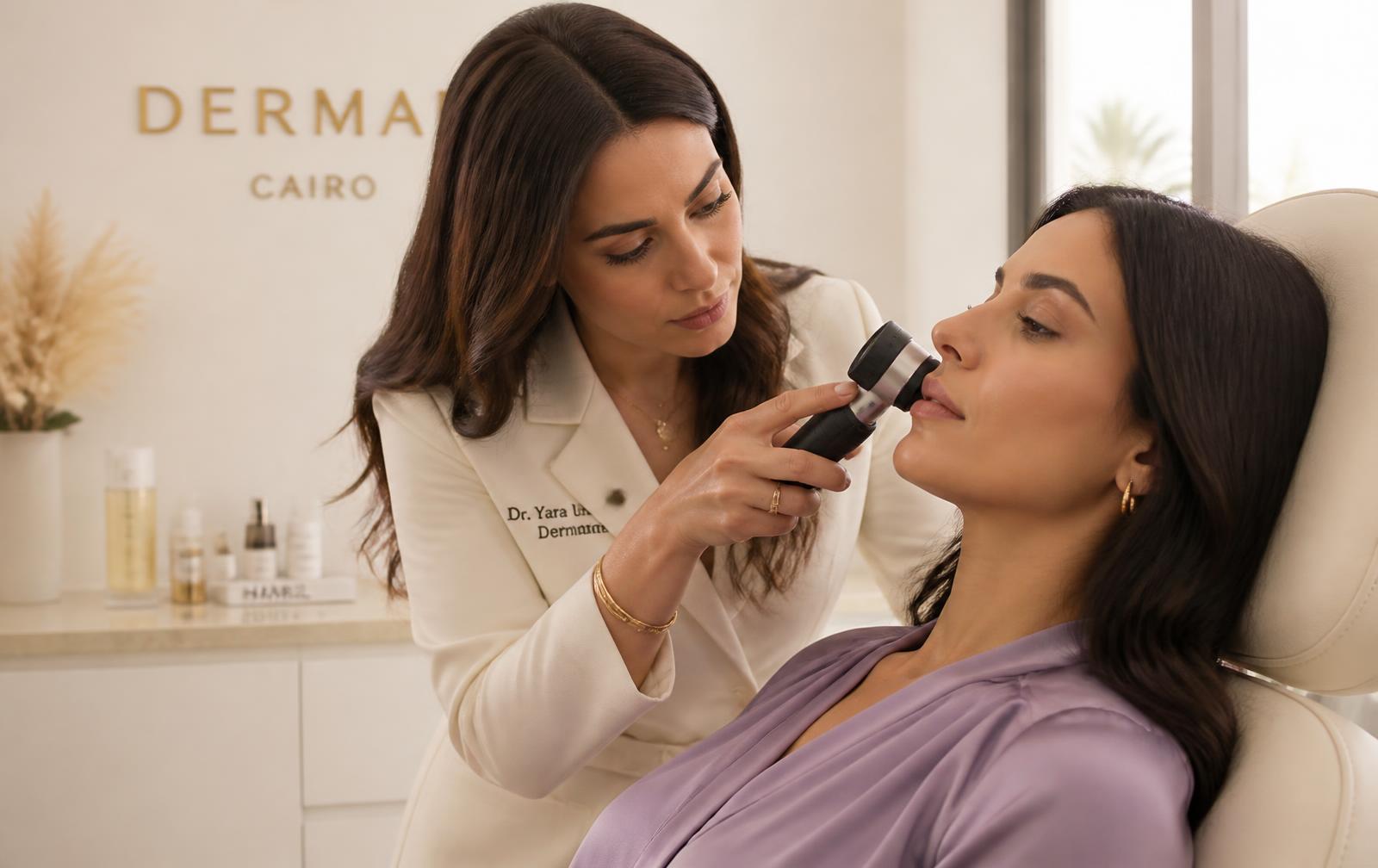
Persistent facial redness is treated as sensitivity far too often. Rosacea, seborrhoeic dermatitis and a damaged barrier look similar in the mirror and need completely different prescriptions.
Facial redness is one of the most common reasons patients book a dermatology consultation at New Me, and one of the most frequently self-diagnosed. Most arrive having bought a product marketed for sensitive skin. In roughly half of those consultations, the diagnosis is not sensitivity at all — it is a medical condition that will keep progressing until it is treated as one.
What redness actually tells us
Redness is a symptom, not a diagnosis. What matters clinically is the pattern: where it sits, whether visible vessels are present, whether there are papules, whether it flushes and settles or stays fixed, and whether the skin also flakes or stings.
- Rosacea — central face, fixed background redness, visible vessels, papules without blackheads, flushing triggers
- Seborrhoeic dermatitis — redness with greasy flaking in the folds of the nose, brows and hairline
- Barrier damage — stinging and tightness after over-exfoliation, improves within weeks of simplifying care
- Contact allergy — sharply defined redness that follows a product, fragrance or hair-dye pattern
- Photodamage — diffuse redness with sun-exposed distribution and irregular pigment
“If the redness has been present for more than three months and never fully settles, it is a medical diagnosis waiting to be made — not a moisturiser problem.”
How we reach a diagnosis
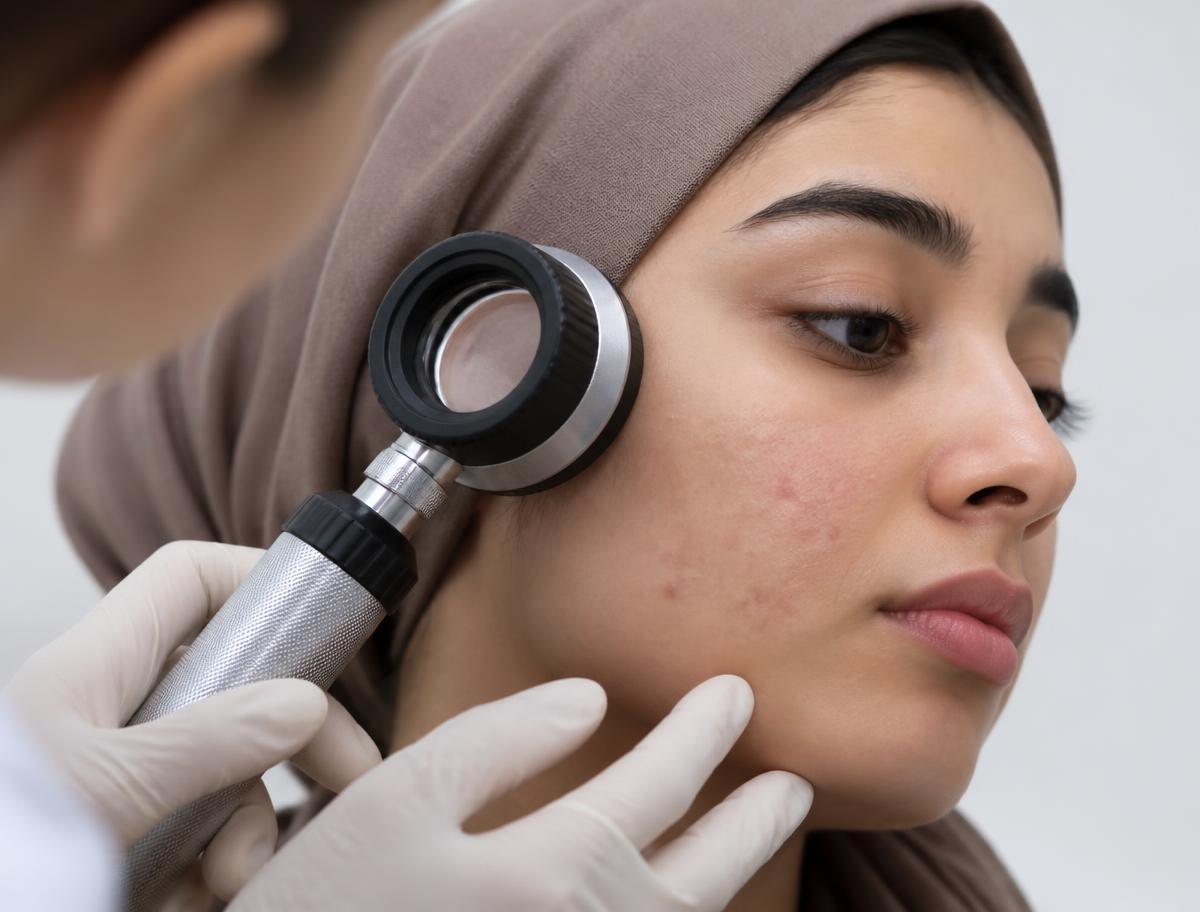
A dermatology consultation at New Me includes a full history of triggers and previous products, dermatoscopic examination of vessels and follicles, and where relevant a Wood's lamp assessment or patch testing. That sequence separates rosacea from its mimics in a single visit in most cases.
The treatment pathway
Calm the inflammation
Rosacea responds to prescription topicals such as azelaic acid, ivermectin or metronidazole, and in inflammatory subtypes to a short course of oral anti-inflammatory therapy. Seborrhoeic dermatitis needs antifungal treatment instead — using a rosacea protocol on it will do nothing.
Rebuild the barrier
In parallel we strip the routine back to a non-foaming cleanser, a ceramide moisturiser and mineral SPF 50. No scrubs, no cleansing devices, no acids for at least eight weeks.
Treat the vessels
Once inflammation is controlled, visible vessels and persistent flushing respond well to vascular laser or IPL, calibrated carefully for deeper phototypes. Typically three sessions, spaced four weeks apart, with maintenance once or twice a year.
Living with it well
Rosacea is chronic but highly controllable. Patients who identify their own triggers — heat, alcohol, spice, sudden temperature change, stress — and hold a simple prescribed routine typically stay clear for years between flares.
Frequently asked
Can rosacea be cured?
It is controlled rather than cured. Most patients reach the point where redness is not visible to others, and maintain that with a simple routine and periodic review.
Does rosacea appear in darker skin?
Yes. It is often missed because background redness is harder to see, so diagnosis relies more on papules, texture and symptom history.
Is laser safe for facial redness?
Vascular laser and IPL are effective once inflammation is settled, provided the settings are chosen for your phototype by an experienced clinician.
Is this article a substitute for a consultation?
No. This article is educational. Treatment decisions at New Me are made after an in-person skin assessment, medical history review and, where relevant, imaging or patch testing.
Related treatments
- Dermatology consultation
Diagnosis, dermatoscopy and patch testing
- Vascular laser and IPL
For visible vessels and flushing
- Barrier repair facial
Medical-grade, non-irritating
Related products
Ceramide repair cream
Fragrance-free barrier support
Mineral SPF 50
Zinc-based, suited to reactive skin
About the author
Dr. Mariam Fouad
Medical Director, New Me Aesthetics & Wellness Clinic
Dr. Mariam Fouad leads the medical team at New Me in Mohandessin, with a practice built around evidence-based dermatology and conservative, natural-looking aesthetic outcomes. She consults personally on every injectable and laser protocol prescribed at the clinic.